
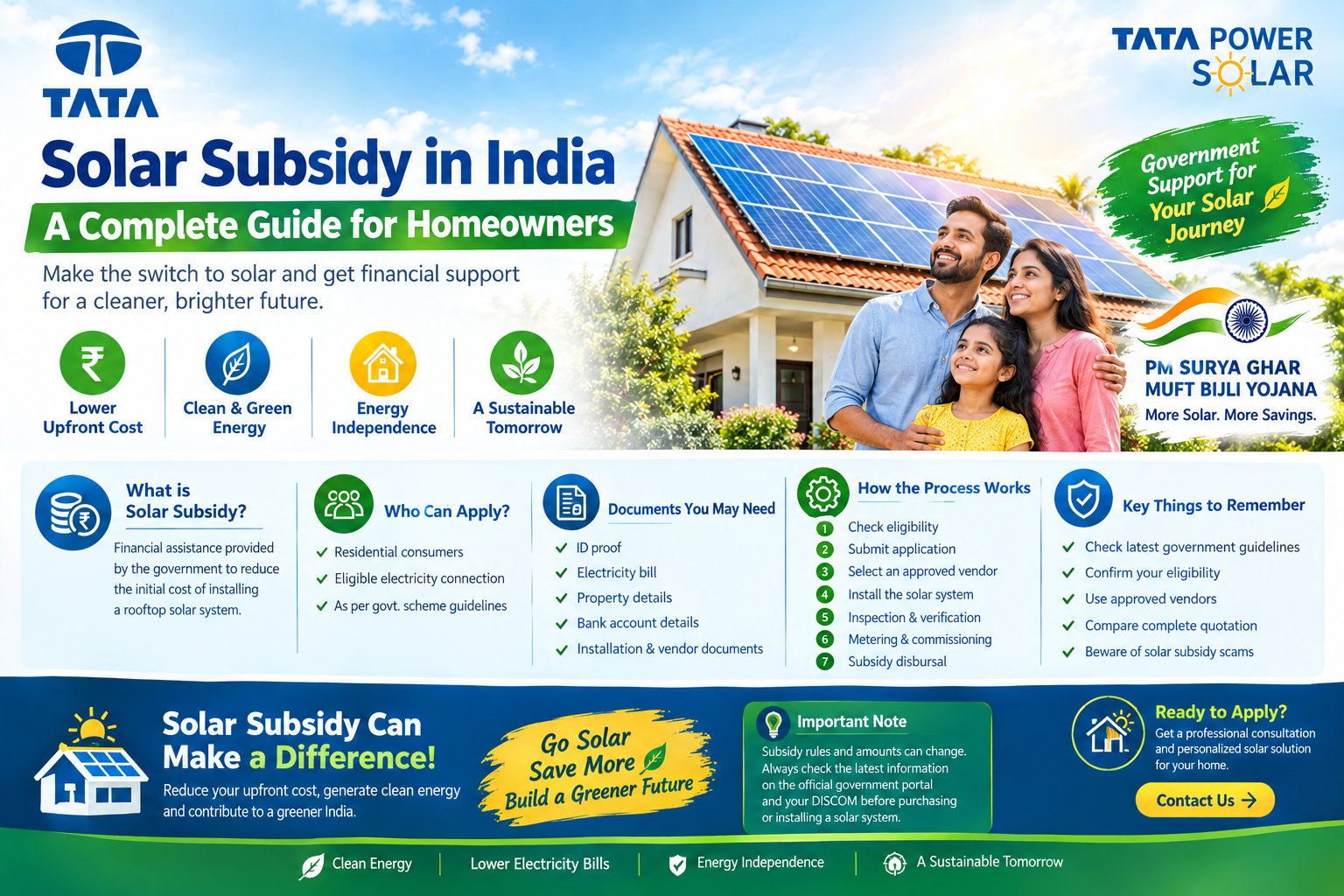
Installing a rooftop solar system can help homeowners generate electricity from sunlight and reduce their dependence on conventional grid electricity. For eligible residential consumers, government-supported solar subsidy programs can also help reduce the initial cost of installing a rooftop solar system.
However, subsidy rules, eligibility, application procedures and amounts can change over time. Homeowners should always check the latest information through the official government portal and their electricity distribution company (DISCOM) before making a purchase or installation decision.
This guide explains what solar subsidy is, who may qualify, how the process generally works, what documents may be required, and what homeowners should consider before applying.
What Is Solar Subsidy?
A solar subsidy is financial assistance provided under an applicable government program to encourage the installation of renewable-energy systems.
For residential rooftop solar, subsidy support may be linked to the size of the eligible system and the applicable government scheme and guidelines.
The actual subsidy amount and eligibility depend on the current rules in force at the time of application.
Why Is Solar Subsidy Available?
Government solar programs are designed to encourage greater adoption of renewable energy and rooftop solar generation.
For homeowners, eligible financial support may help:
- Reduce the initial installation cost
- Make rooftop solar more accessible
- Encourage clean-energy adoption
- Increase residential solar generation
- Reduce dependence on conventional electricity sources
Who Can Apply for Residential Solar Subsidy?
Eligibility depends on the applicable government program.
In general, residential consumers connected to an eligible electricity distribution network may be able to apply for applicable rooftop solar incentives, subject to the current scheme requirements.
Before applying, homeowners should verify:
- Consumer eligibility
- Electricity connection requirements
- Approved system requirements
- Installation requirements
- Approved vendor requirements
- Applicable subsidy rules
- DISCOM requirements
Businesses, commercial establishments and industrial consumers may be subject to different policies and should not assume that residential subsidy rules apply to them.
How Does the Solar Subsidy Process Work?
While the exact procedure can change, the general process can involve the following steps.
Step 1: Check Eligibility
Start by checking the latest residential rooftop solar subsidy guidelines through the applicable official government platform and DISCOM.
Step 2: Register or Apply
Complete the required application or registration process using the designated official platform or procedure.
Step 3: Select an Eligible Solar Provider
Depending on the applicable scheme, the homeowner may need to select a vendor that meets the program's requirements.
Step 4: Solar System Installation
The rooftop solar system is installed according to the applicable technical and program requirements.
Step 5: Inspection and Documentation
The installation may need to undergo inspection, verification or other approval procedures by the relevant authority or DISCOM.
Step 6: Metering and Commissioning
For applicable grid-connected systems, the required metering and grid-connection process is completed.
Step 7: Subsidy Processing
Once the applicable requirements are completed and verified, the subsidy or financial assistance is processed according to the current scheme rules.
What Documents May Be Required?
The exact documentation depends on the current subsidy program and application process.
Homeowners may be asked to provide information such as:
- Electricity consumer details
- Electricity connection information
- Identity information
- Property or installation details
- Bank account information
- Installation-related documents
- System and vendor details
- Required declarations or forms
Always follow the document requirements displayed on the official application portal rather than relying on an outdated checklist.
Does Every Solar System Qualify for Subsidy?
Not necessarily.
Eligibility can depend on several factors, including:
- Consumer category
- System capacity
- Type of installation
- Approved equipment
- Vendor eligibility
- Technical standards
- Application procedure
- Current government guidelines
This is why homeowners should confirm eligibility before purchasing or installing the system.
Why Should You Check Subsidy Eligibility Before Installation?
Choosing a solar system without first understanding the applicable subsidy requirements can create unnecessary complications.
Before placing an order, ask your solar provider to explain:
- Whether the system is eligible
- Which subsidy program applies
- Whether the selected vendor meets the applicable requirements
- What documentation is required
- Which approvals are necessary
- How the application process works
- Which costs are included in the quotation
The homeowner should independently verify important subsidy information through official sources.
Does Solar Subsidy Cover the Entire Solar System Cost?
A subsidy is generally intended to provide financial assistance toward an eligible portion of the installation and should not automatically be understood as covering the entire project cost.
The homeowner may still have expenses related to the system, installation, electrical work, structural requirements, upgrades or other applicable charges.
The exact financial benefit depends on the current government guidelines and the specific installation.
What Should You Check in a Solar Quotation?
A detailed quotation should clearly identify the system being offered.
Look for:
- Solar system capacity
- Number of panels
- Panel specifications
- Inverter specifications
- Mounting structure
- Installation scope
- Electrical protection
- Metering-related work, where applicable
- Warranty details
- Service support
- Applicable taxes and charges
- Subsidy-related information
Do not choose a solar system solely because a quotation advertises a subsidy.
How Can You Avoid Solar Subsidy Scams?
As solar adoption grows, consumers may encounter misleading claims about subsidies.
Be careful with anyone who:
- Guarantees an unverified subsidy amount
- Requests payment for an unofficial application
- Claims government approval without evidence
- Uses misleading government branding
- Promises guaranteed subsidy before checking eligibility
- Pressures you to make an immediate payment
Verify subsidy information through the official government portal, DISCOM and authorized channels before making payments.
Solar Subsidy and Rooftop Solar: What Homeowners Should Remember
The subsidy is only one part of the solar investment.
Homeowners should also evaluate:
System Quality
Check the specifications and warranty of the panels, inverter and other major components.
Installation Quality
Professional installation is important for electrical safety, system performance and long-term operation.
Roof Suitability
The roof should have adequate space, suitable sunlight exposure and appropriate structural conditions.
After-Sales Service
Ask who will provide support if the inverter displays an error or another system issue occurs.
Total Project Cost
Compare the complete project cost rather than looking only at the advertised subsidy.
Frequently Asked Questions
How can I check the latest solar subsidy?
Check the latest information on the official government rooftop solar platform and with your local electricity distribution company. Subsidy rules can change, so older articles or advertisements may not reflect current requirements.
Is solar subsidy available for residential customers?
Government rooftop solar programs can provide incentives for eligible residential consumers, subject to the applicable scheme and current guidelines.
Can commercial properties claim residential solar subsidy?
Residential and commercial categories can have different rules. A commercial consumer should verify the incentives specifically applicable to its consumer category.
Do I need an approved solar vendor?
Depending on the applicable subsidy program, vendor eligibility and technical requirements may apply. Confirm the current requirements before selecting an installer.
Does subsidy reduce the total solar installation cost?
Eligible financial assistance can reduce the effective cost of an eligible installation, but the exact benefit depends on the applicable scheme, system and eligibility conditions.
Should I install solar before applying for subsidy?
Do not assume that installation before completing the required application or approval steps will qualify. Follow the current official procedure and confirm the required sequence before starting the project.
Conclusion
Solar subsidy can make residential rooftop solar more accessible to eligible homeowners, but the subsidy should be considered alongside system quality, installation standards, warranties, service support and the total project cost.
If you are planning to install solar at your home, first check the latest official subsidy guidelines, confirm your eligibility and understand the applicable installation requirements.
A professional solar consultation can then help you evaluate your electricity consumption, rooftop space and appropriate system configuration before moving forward.
Found this useful?
Share this solar business article.