
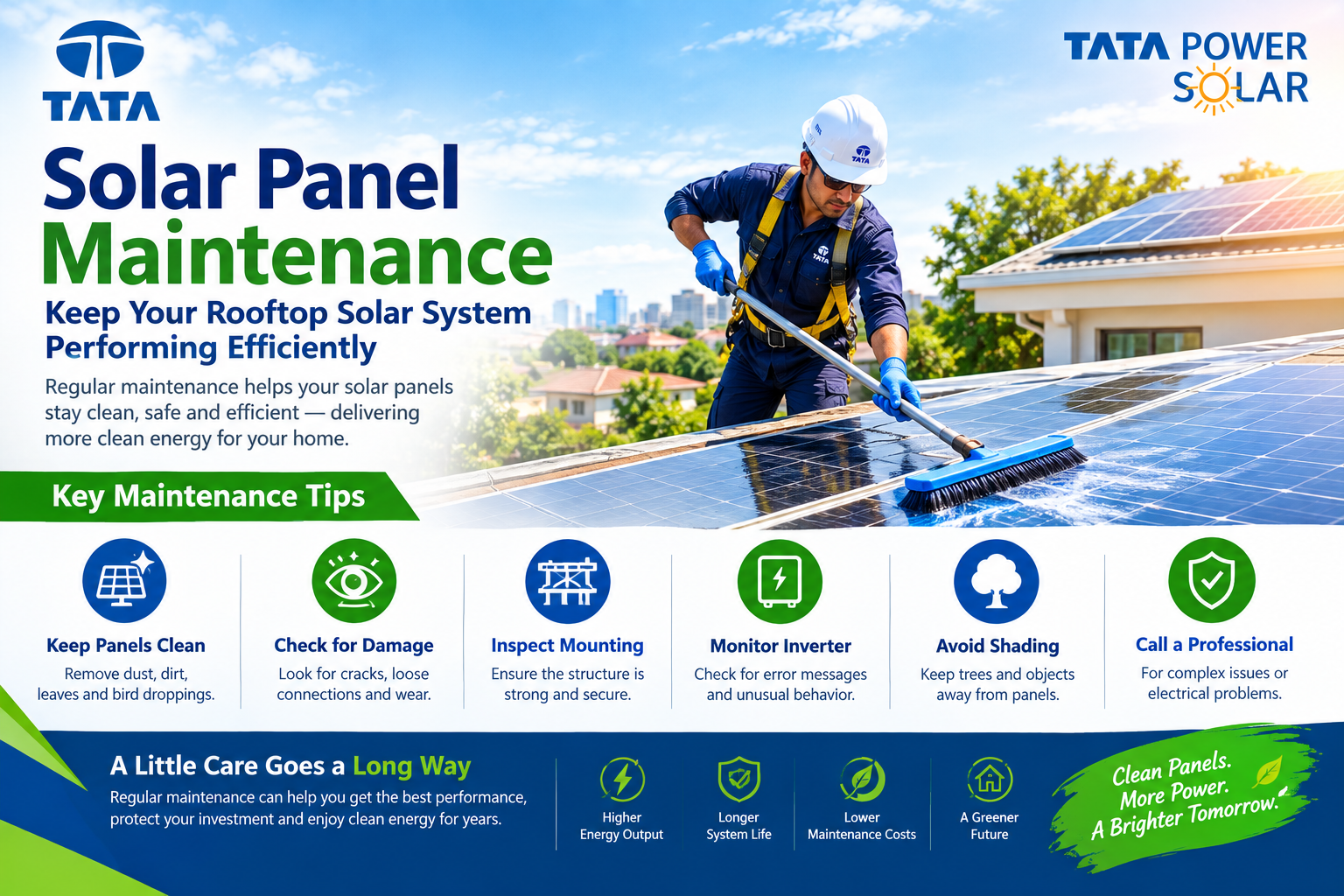
Installing a rooftop solar system is a long-term investment in renewable energy. However, installing solar panels is only the beginning. Regular inspection, cleaning and monitoring can help homeowners identify potential issues and maintain the system over time.
Solar panels generally require relatively low maintenance, but they should not simply be installed and forgotten. Dust, dirt, leaves, bird droppings, shading, loose connections and equipment faults can affect system performance.
This guide explains what solar panel maintenance involves, why it matters, when maintenance should be performed, where problems can occur and how homeowners can keep their solar system operating properly.
Why Is Solar Panel Maintenance Important?
Solar panels are installed outdoors and are exposed to weather and environmental conditions throughout the year.
Dust, pollution, leaves and other debris can accumulate on the panel surface and reduce the amount of sunlight reaching the photovoltaic cells.
Regular maintenance can help with:
- Keeping panels clean
- Identifying visible damage
- Monitoring system performance
- Detecting potential electrical issues
- Checking mounting structures
- Keeping the surrounding area clear of obstructions
- Maintaining long-term system performance
How Often Should Solar Panels Be Cleaned?
There is no universal cleaning schedule for every solar installation.
The required frequency depends on factors such as:
- Local dust levels
- Air pollution
- Rainfall
- Nearby trees
- Bird activity
- Roof location
- Seasonal conditions
Homes located in dusty or highly polluted areas may require more frequent cleaning than installations that receive regular rainfall.
Instead of following a fixed schedule alone, homeowners should monitor the condition of their panels and clean them when significant dirt or debris is visible.
What Happens When Solar Panels Get Dirty?
Solar panels need sunlight to generate electricity. When the surface becomes covered with dust, dirt or other deposits, less sunlight may reach the photovoltaic cells.
The effect on energy generation varies depending on the type and amount of soiling, weather conditions and system configuration.
Keeping panels reasonably clean can therefore support consistent system operation.
What Should Be Checked During Solar Panel Maintenance?
Solar maintenance should cover more than just cleaning the panels.
1. Panel Surface
Check for:
- Excessive dirt
- Bird droppings
- Leaves
- Physical damage
- Visible cracks
- Other unusual marks
2. Mounting Structure
The mounting structure should be visually inspected for signs of damage, corrosion or other issues.
3. Cables and Connections
Visible cables should be checked for signs of damage, loose connections or deterioration.
Electrical work should only be performed by appropriately qualified professionals.
4. Solar Inverter
The inverter is an important component of the solar system. Check for warning indicators, error messages or unusual operating conditions.
If an inverter displays an error, refer to the manufacturer's instructions or contact an authorized service professional.
5. Shading
Trees, new construction or other objects can create additional shade on solar panels.
Because solar generation depends on sunlight, changes in shading can affect system output.
How Does Weather Affect Solar Panels?
Solar panels are designed for outdoor use, but environmental conditions can still affect their operation.
Heavy rain may naturally wash away some dust, while extended dry periods can allow dirt to accumulate.
Strong winds can also bring leaves and debris onto rooftops.
After severe weather, homeowners should visually inspect the installation from a safe location and arrange a professional inspection if any damage is suspected.
Should You Clean Solar Panels Yourself?
For ground-level or easily accessible installations, basic cleaning may sometimes be possible with appropriate equipment and safe procedures.
However, rooftop solar systems can involve significant fall and electrical hazards.
Homeowners should avoid climbing onto roofs or handling electrical components without appropriate training and safety equipment.
When the panels are difficult or unsafe to access, professional solar maintenance is the safer approach.
What Is the Best Way to Clean Solar Panels?
Cleaning methods should follow the solar panel manufacturer's recommendations.
In general, cleaning should avoid:
- Abrasive materials
- Harsh chemicals
- Scratching the panel surface
- Excessive pressure
- Unsafe rooftop practices
Clean water and suitable non-abrasive cleaning methods may be appropriate for many installations, but the manufacturer's instructions should always take priority.
Monitor Your Solar System Performance
Modern solar systems may provide monitoring through an inverter display, monitoring platform or mobile application.
Regularly reviewing system performance can help homeowners notice unusual changes.
For example, if electricity generation suddenly decreases without a corresponding change in weather or household conditions, the system may require inspection.
Monitoring does not replace professional maintenance, but it can help identify potential problems earlier.
What Can Reduce Solar System Performance?
Several factors can affect solar generation, including:
Dust and Dirt
Accumulated dirt can reduce sunlight reaching the solar cells.
Shading
Trees, buildings and other objects can block sunlight.
Weather
Cloudy conditions naturally reduce solar irradiation reaching the panels.
Equipment Issues
Problems with the inverter, cables or other components can affect system operation.
Panel Damage
Physical damage can require professional inspection and possible replacement.
Understanding these factors helps homeowners distinguish normal variations in solar generation from potential system issues.
When Should You Call a Solar Professional?
Professional assistance is recommended when you notice:
- Repeated inverter error messages
- Unexpected drops in solar generation
- Damaged panels
- Loose or damaged cables
- Mounting structure problems
- Water or electrical concerns
- Unusual sounds or smells from equipment
Do not attempt to repair electrical components yourself if you are not qualified to do so.
Solar Maintenance Checklist
Use this simple checklist to keep track of your rooftop solar system:
- Check panels for visible dirt and debris
- Look for new shading
- Monitor solar generation
- Check inverter status
- Inspect visible mounting components
- Look for visible cable damage
- Keep nearby vegetation under control
- Arrange professional inspection when required
- Keep warranty and installation documents safely stored
Frequently Asked Questions
Do solar panels require regular maintenance?
Solar panels generally require relatively low maintenance, but periodic cleaning, visual inspection and performance monitoring can help maintain system operation.
Can rain clean solar panels?
Rain can remove some dust and debris, but it may not completely clean panels, particularly when deposits or bird droppings have accumulated.
How do I know if my solar panels are working properly?
Monitoring your system's electricity generation and checking the inverter status can help you identify unusual changes. A professional inspection may be necessary if performance changes unexpectedly.
Can dust reduce solar panel output?
Dust and other deposits can reduce the sunlight reaching the panel surface. The effect depends on the amount and type of soiling and local conditions.
Should I clean solar panels during the afternoon?
Solar panels and rooftops can become hot during the day. Cleaning should follow the manufacturer's recommendations and safe working practices rather than simply choosing a particular time.
Do solar inverters need maintenance?
Inverters should be monitored for warning messages and visible problems. Professional inspection should be arranged when an error or abnormal operation is detected.
Conclusion
A rooftop solar system is designed to provide clean electricity for many years, but regular attention can help homeowners maintain its performance.
Keeping panels reasonably clean, monitoring energy generation, checking for shading and arranging professional inspections when necessary are important parts of responsible solar-system ownership.
If you are planning to install a residential solar system, ask your solar provider about the recommended maintenance schedule, warranty coverage and after-sales support before completing your installation.
Found this useful?
Share this solar business article.