
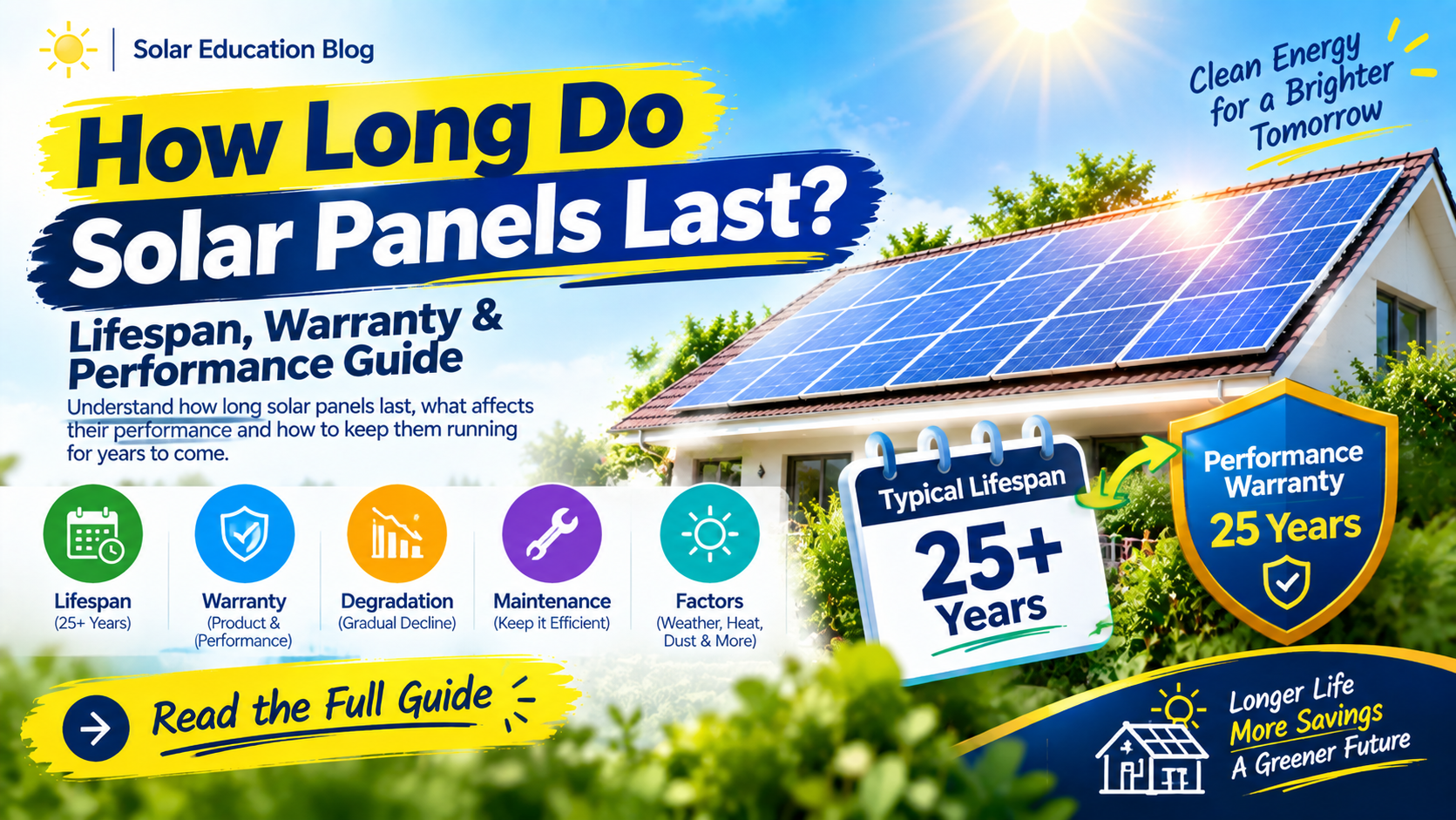
Installing a rooftop solar system is a long-term investment, so one of the most common questions homeowners ask is: How long do solar panels last?
Solar panels are designed to operate for many years, but their electricity output can gradually decline over time. Understanding panel lifespan, degradation, warranties, maintenance and replacement requirements can help homeowners plan their solar investment more effectively.
In this guide, we explain how long solar panels typically last, what happens as they age, what affects their lifespan and how to keep them performing well for years.
How Long Do Solar Panels Last?
Most modern solar panels are designed for decades of operation. Many manufacturers provide long-term performance warranties that specify minimum power output after a certain number of years.
However, solar panel lifespan does not mean that the panels suddenly stop working after a fixed period.
Instead, their electricity-generating capacity generally gradually decreases over time.
The actual lifespan depends on factors such as:
- Panel quality
- Solar cell technology
- Installation quality
- Weather exposure
- Operating temperature
- Moisture and humidity
- Dust and environmental conditions
- Maintenance
- Mounting and structural conditions
What Happens to Solar Panels as They Age?
Solar panels experience a process called degradation.
Degradation means that a solar module's ability to produce electricity gradually decreases over its operating life.
For example, a panel that produces a certain amount of electricity when new may produce somewhat less electricity after many years.
This does not mean the panel becomes useless. It can continue generating electricity while operating at a lower output level.
Solar Panel Degradation
The rate of degradation varies by:
- Panel technology
- Manufacturer
- Environmental conditions
- Installation conditions
- Product design
This is why homeowners should review the manufacturer's performance warranty and degradation terms before purchasing panels.
What Is a Solar Panel Performance Warranty?
A solar panel normally comes with warranty coverage that may include different components.
Product Warranty
The product warranty generally covers defects or issues related to the manufacturing and materials of the panel, subject to the manufacturer's terms.
Performance Warranty
A performance warranty specifies how much power the panel is expected to retain over a defined period under the warranty conditions.
When comparing solar panels, don't look only at the warranty duration. Also check:
- Initial power rating
- Guaranteed output over time
- Degradation terms
- Warranty conditions
- Claim procedure
- Manufacturer support
What Factors Affect Solar Panel Lifespan?
Several factors can influence how well solar panels perform over the long term.
1. Quality of the Solar Panel
Panel construction, materials and manufacturing quality can influence durability.
Choosing products from established manufacturers and checking warranty documentation can help with long-term planning.
2. Installation Quality
Incorrect installation can create unnecessary stress on modules, mounting structures, cables or electrical connections.
Professional installation is important for both performance and safety.
3. Weather Conditions
Solar panels remain outdoors and are exposed to:
- Sunlight
- Heat
- Rain
- Wind
- Humidity
- Dust
- Seasonal weather changes
The local environment can influence long-term performance.
4. High Temperatures
Solar modules operate outdoors and can reach temperatures significantly above ambient conditions.
Panel temperature characteristics are therefore an important specification when comparing products.
5. Moisture
Water ingress or prolonged exposure to moisture can affect electrical components if the equipment or installation is compromised.
Proper installation and suitable equipment help reduce these risks.
6. Physical Damage
Hail, falling branches, animals or other physical events can damage panels.
Regular visual inspection can help identify obvious problems early.
7. Poor Maintenance
Dust, dirt, bird droppings and other deposits can reduce sunlight reaching the solar cells.
Keeping the system appropriately maintained can help preserve performance.
Do Solar Panels Need to Be Replaced After 25 Years?
Not necessarily.
A commonly used planning horizon for solar panels is around 25 years or more, but the exact operating life depends on the panel and environmental conditions.
At the end of a warranty period, the panel does not automatically stop producing electricity.
Instead, homeowners can evaluate:
- Current electricity generation
- Panel condition
- Degradation
- Repair requirements
- Inverter condition
- Replacement costs
- Availability of newer technology
If the system continues to perform satisfactorily, replacement may not be immediately necessary.
How Can You Extend Solar Panel Lifespan?
Good installation and regular system care can support long-term performance.
Keep Panels Clean
Inspect the panels periodically and clean them when necessary using safe, appropriate methods.
Monitor System Performance
Use your inverter or solar monitoring platform to track electricity generation.
Unexpected changes can sometimes indicate:
- Shading
- Dirt accumulation
- Equipment problems
- Inverter faults
- Electrical issues
Inspect Mounting Structures
Check for visible signs of corrosion, loose components or physical damage.
Any electrical or structural repair should be handled by a qualified professional.
Manage New Shading
Trees can grow and nearby structures can change.
If new shading develops, it can reduce solar generation and should be evaluated.
Use Professional Servicing
Do not attempt electrical repairs yourself.
A qualified solar professional can inspect the system and identify potential issues safely.
How Long Does a Solar Inverter Last?
Solar panels and inverters do not necessarily have the same operating lifespan.
The inverter is an important electronic component of the system and may require servicing or replacement before the solar modules.
This means homeowners should consider both panel longevity and inverter longevity when planning the long-term cost of a solar system.
Signs That Your Solar Panels May Need Inspection
A sudden or unexplained reduction in solar generation can be a reason to investigate.
Look for:
- Significant drop in electricity generation
- Visible cracks or damage
- Discoloration
- Loose components
- Damaged cables
- Persistent inverter warnings
- Water or moisture-related concerns
- New shading
- Unusual monitoring readings
A performance reduction does not automatically mean the panels need replacement. Professional testing can help identify the actual cause.
Solar Panel Lifespan vs Solar System Lifespan
It is important to understand that a solar system consists of multiple components.
A typical rooftop installation can include:
- Solar panels
- Inverter
- Mounting structure
- DC and AC cables
- Protection equipment
- Metering equipment
- Monitoring system
- Battery, if applicable
Each component can have different warranty and replacement considerations.
Therefore, when evaluating a solar installation, look at the complete system lifecycle, not only the panel warranty.
What Should You Check Before Buying Solar Panels?
Before purchasing a rooftop solar system, ask for clear information about:
- Panel manufacturer and model
- Rated power
- Efficiency
- Product warranty
- Performance warranty
- Degradation terms
- Inverter warranty
- Installation warranty
- Monitoring system
- After-sales support
Keep copies of invoices, warranties and installation documents for future reference.
Frequently Asked Questions
How many years do solar panels last?
Solar panels are designed for long-term operation, commonly over several decades, although their electricity output gradually declines with age.
Do solar panels stop working after 25 years?
No. Reaching 25 years does not automatically mean a solar panel stops working. Its output may have declined, but the panel can continue generating electricity depending on its condition.
Do solar panels lose efficiency over time?
Solar panels generally experience gradual degradation in electrical output over their operating life. The exact degradation rate depends on the product and its warranty terms.
Can solar panels last 30 years?
Some solar panels can continue operating for 30 years or longer. Actual performance depends on product quality, environmental exposure, installation and maintenance.
How often should solar panels be checked?
Periodic visual inspection and performance monitoring are useful. The appropriate professional inspection schedule can depend on the system, environment and manufacturer recommendations.
Which part of a solar system may need replacement first?
Different components have different expected lifespans. Electronic equipment such as an inverter may require replacement earlier than the solar modules, depending on the product and operating conditions.
Is it worth buying solar panels with a longer warranty?
Warranty duration is one factor to consider. You should also examine the warranty terms, performance guarantees, degradation provisions, manufacturer support and overall system quality.
Solar Panel Lifespan Checklist
Before installing a solar system, make sure you understand:
- Panel product warranty
- Panel performance warranty
- Degradation terms
- Panel efficiency
- Inverter warranty
- Installation warranty
- Maintenance requirements
- Monitoring options
- Service and support
- Replacement considerations
Conclusion
Solar panels are designed as long-term energy-generation equipment, with many systems planned to operate for decades.
Their performance gradually changes over time, but proper product selection, professional installation, suitable maintenance and regular monitoring can help homeowners get reliable value from their rooftop solar investment.
When comparing solar panels, look beyond the initial price. Consider quality, efficiency, warranty, degradation, installation and long-term service support to understand the complete value of your solar system.
Found this useful?
Share this solar business article.